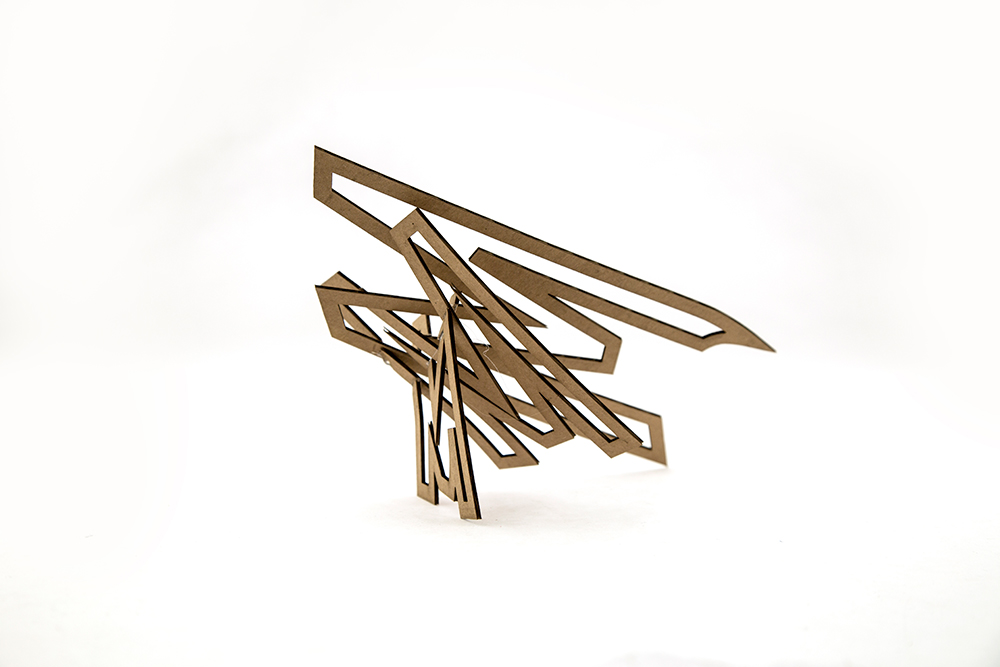
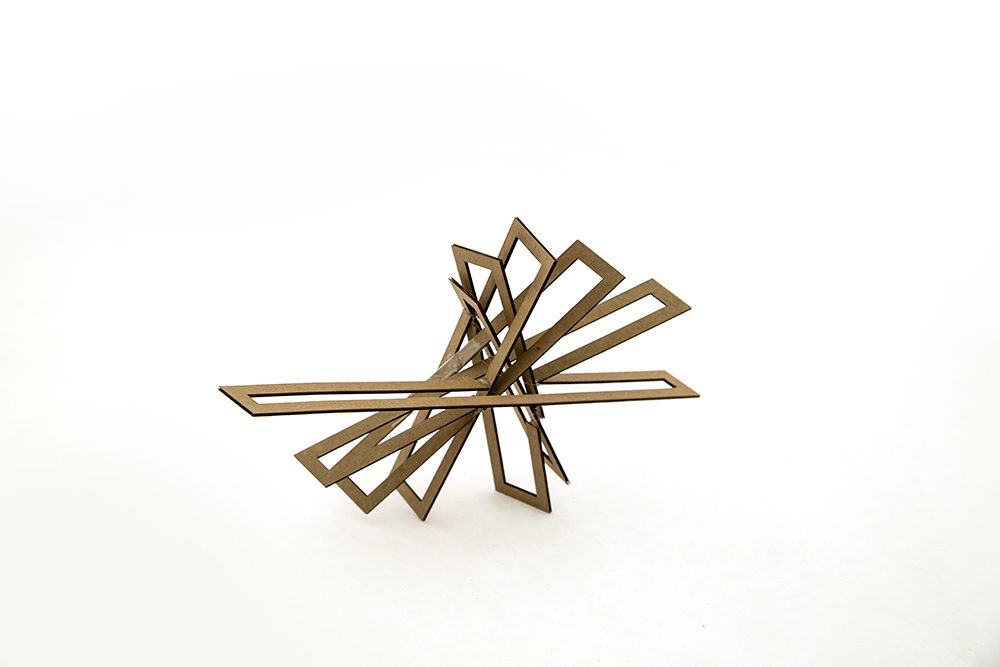
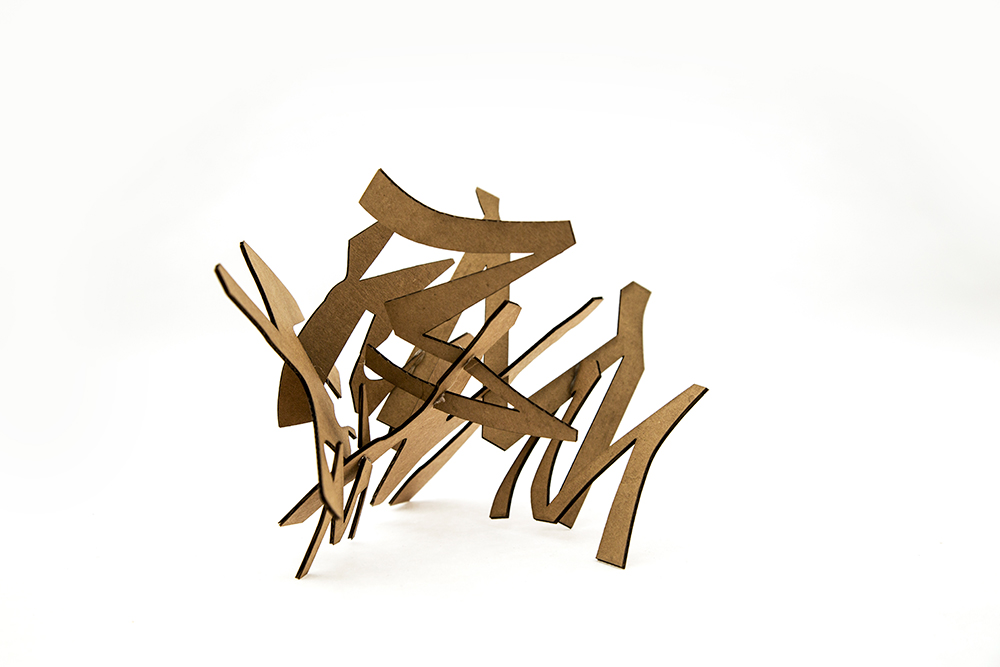
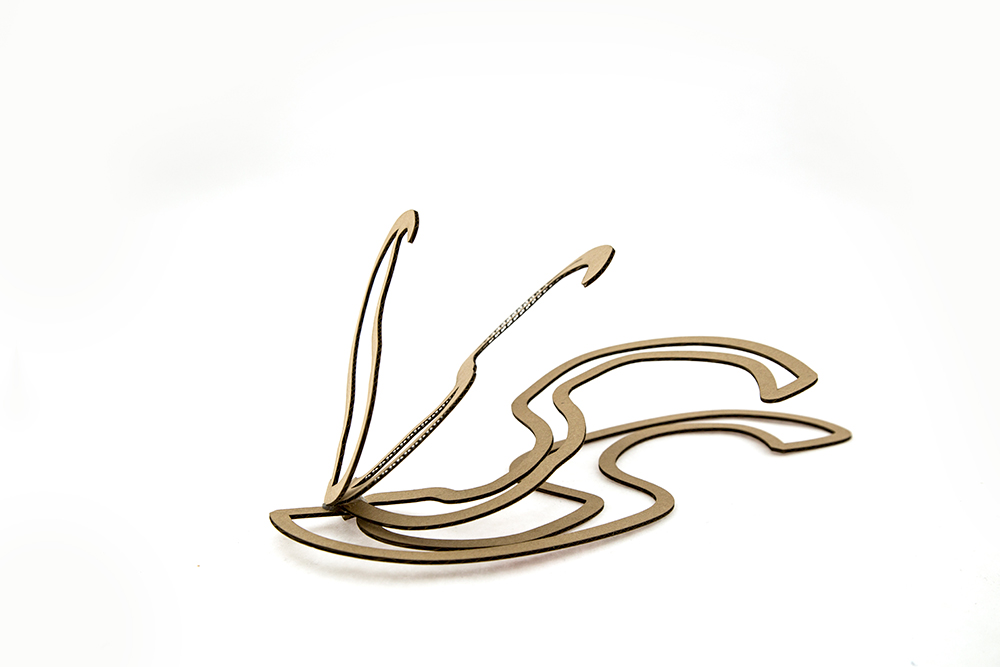
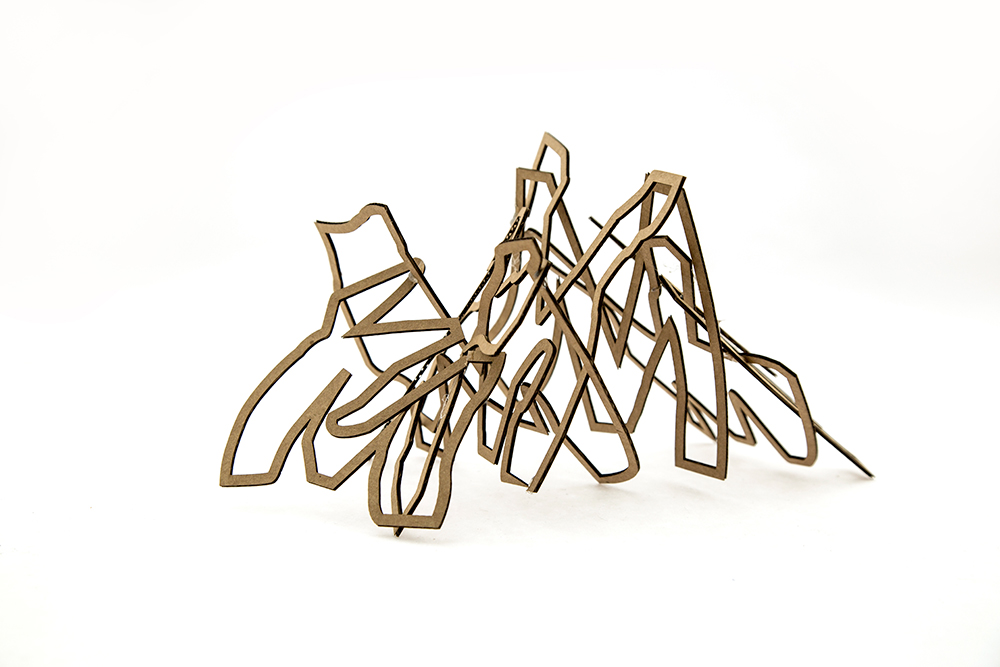
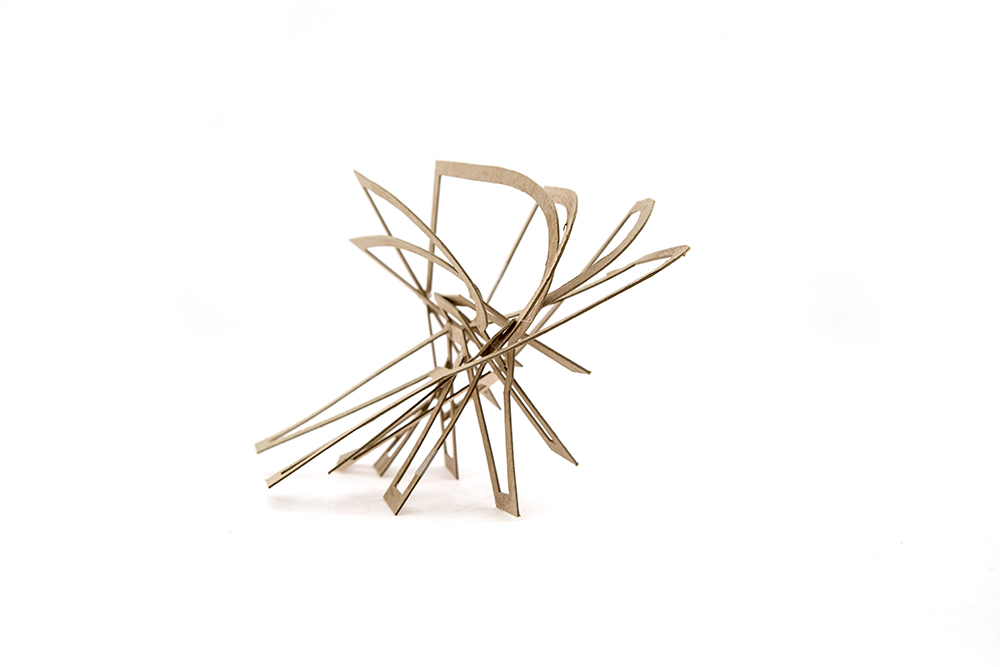
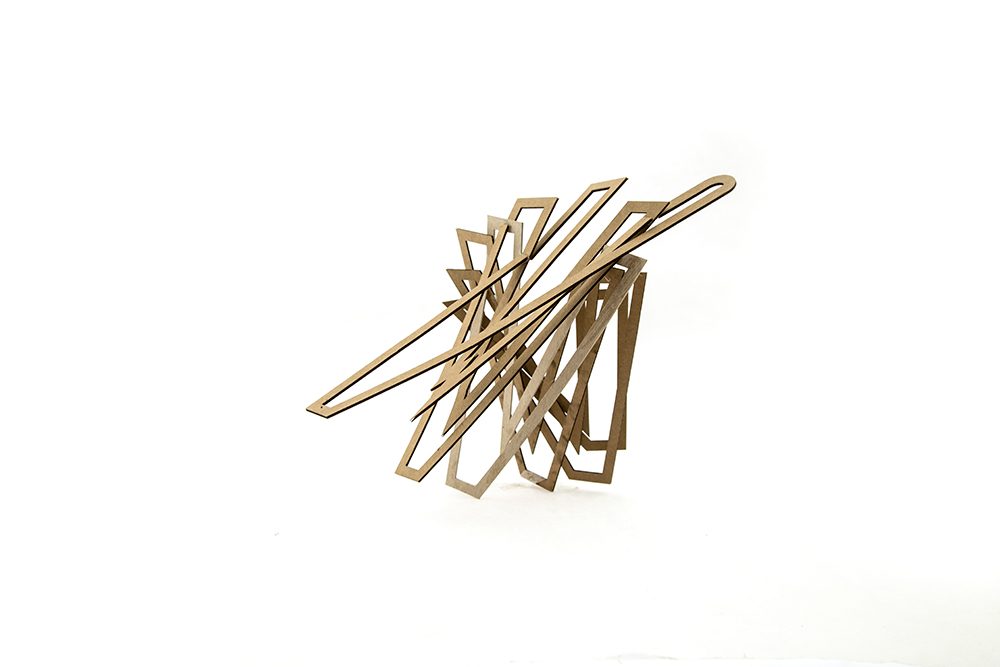
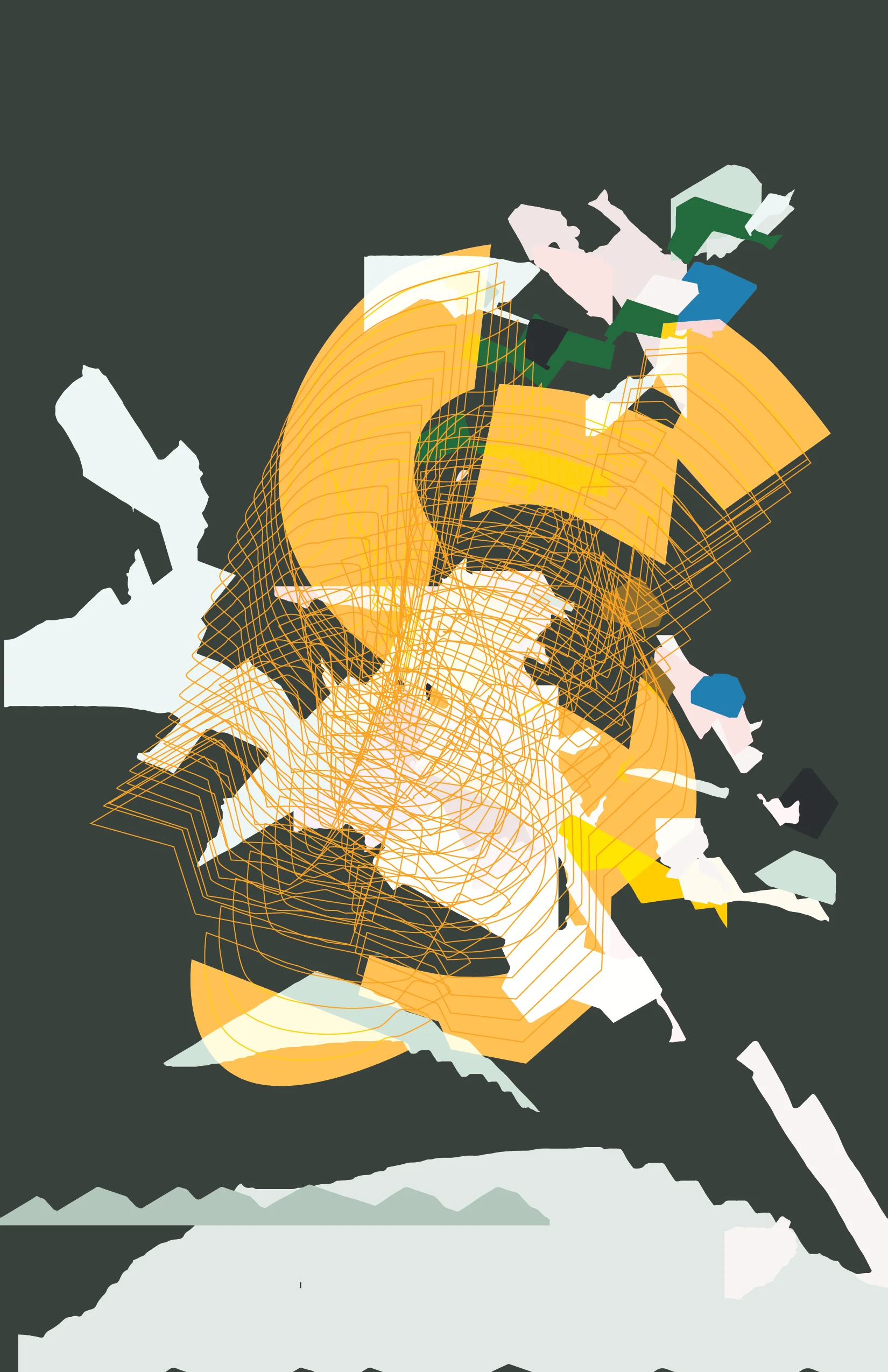
Happy accidents. Exploring temporal type.
Exploring temporal type. Encountering glitches.
Within the field of typography, letterforms typically embody either static or kinetic forms. However there is yet another category that escapes the purely static or purely kinetic. This is temporal typography. Unlike static typography, these forms are not bound by one iteration within a singular viewing experience. And similar to kinetic type, temporal typography carries the stamp of time but is not relegated movement or time-based media. Temporal letterforms have the ability to manifest themselves in both static and kinetic ways, as well as physical and digital and therefore cannot be evaluated by the same functional factors of traditional typography: legibility and readability. Viewership and perception are elevated, and formal and experiential conditions are re-prioritized as the forms transition from one state to the next. As a means of mapping the territory of temporal typography and setting parameters for my explorations, I have identified and defined three independent qualities of temporal type: transitory, navigable, and medial. My studies examine these characteristics as distinct from one another allowing me to explore the boundaries and define intrinsic qualities of temporal typography.
Happy accidents. Exploring temporal type.
Exploring temporal type. Encountering glitches.
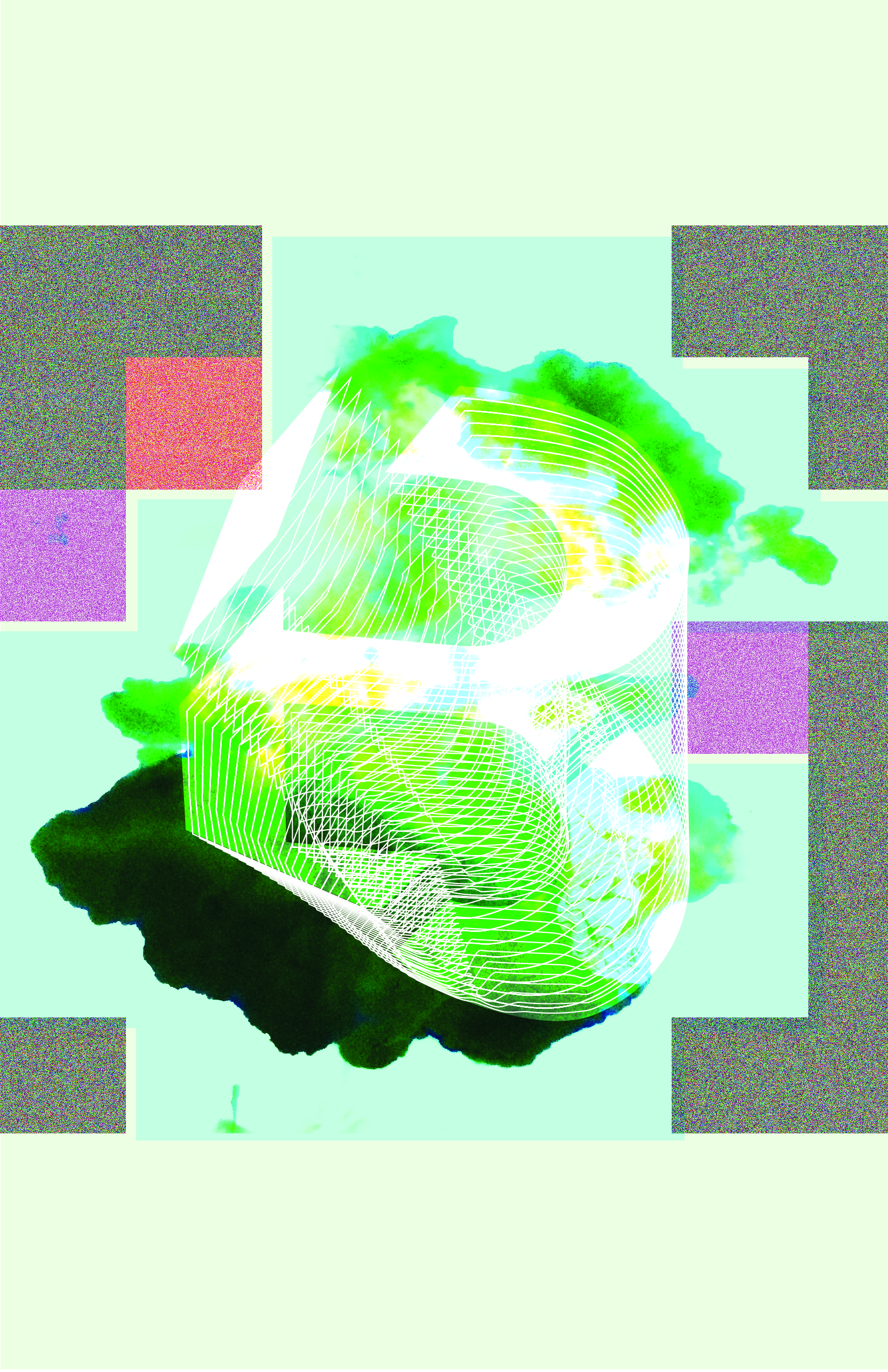
I had the pleasure of participating in a workshop lead by Keetra Dean Dixon this weekend at CCA. It was 12 hours of pure fun. Tools used were marshmallows, food coloring, Illustrator, scripts from JK Keller, and Photoshop.
Sometimes when you don't sleep enough, beautiful things happen.
Examining the transitory, fluid nature of temporal type
Within the field of typography, letterforms typically embody either static or kinetic form. However there is yet another category that escapes the purely static or purely kinetic. This is temporal typography. As the familiarity of a form or object decreases, the interpretation requires an active exchange between recognition and perception, encouraging additional levels of interaction from the viewer and allowing new possibilities to be imagined. Understanding and testing the limits of where this interchange occurs will allow me to speculate on and reimagine letterforms that communicate in new or different ways.
When dealing with fluidity in temporal typography, legibility is continually in flux. This means that legibility is a process that occurs (in various measure) as long as the form is mutating. Legibility assumes the viewer of the type is attempting to read, however, temporal type is less focused on readership and more focused on viewership.
Factors of viewership include perception and perspective. Perception is a constant fluctuation of past, present, and future form, requiring a continual rationalization about what is being seen. The perspective or viewpoint determines the angle at which the form is being seen. Due to the transitory nature of temporal typography, the perception and perspective of these forms may also be fluid.
So. The question of the week is whether legibility and readability are contributing factors or simply limitations of temporal typography?