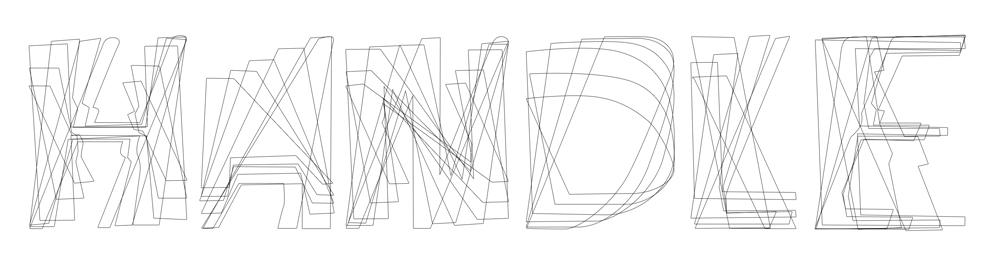
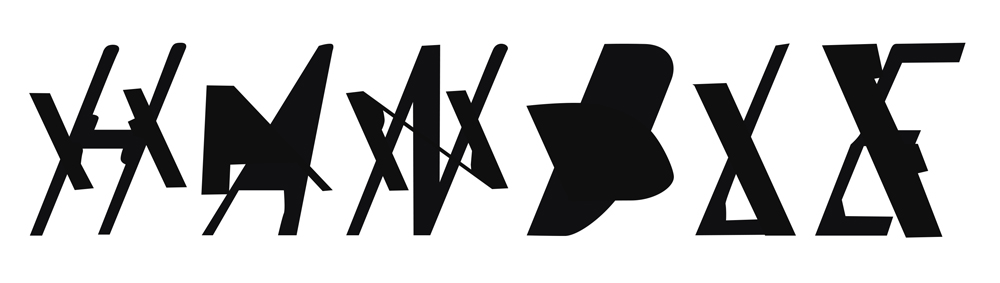
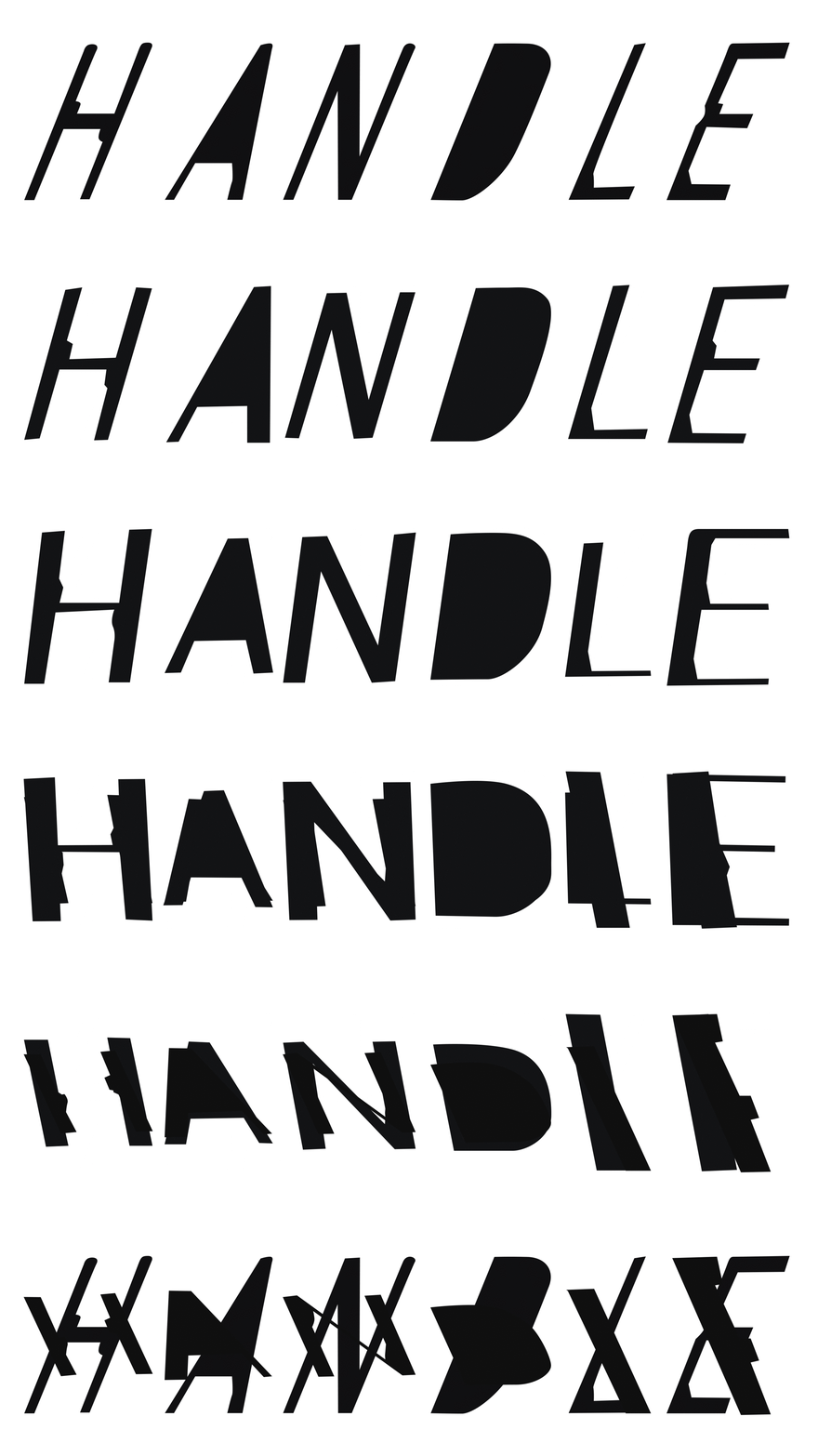
Exploring generative design as a way to produce new and unexpected temporal letterforms.
Projection tests
Examining the transitory, fluid nature of temporal type
I don't care if you can't read this
Within the field of typography, letterforms usually embody static or kinetic form. However, there is yet another category that escapes the purely static or purely kinetic. This is temporal typography.


Unlike kinetic type, it is not the movement or motion of the type that is meaningful in temporal typography, but the transformation from one state to the next. During the transformation process, a variety of forms are created — they may not be able to be identified as type, but are strangely familiar abstract forms. In her paper Fluid Typography: Construction, Metamorphosis, and Revelation, Dr. Barbara Brownie, director of postgraduate study at the University of Hertfordshire, calls these forms "asemic" an open wordless form of writing with no specific semantic content. In asemic writing, a vacuum of meaning is created that is left for the reader (or in this case viewer) to fill and interpret.
As the familiarity of a form or object decreases, the interpretation requires an active exchange between recognition and perception, encouraging additional levels of interaction from the viewer and allowing new possibilities to be imagined. Understanding and testing the limits of where this interchange occurs will allow me to speculate on and reimagine letterforms that communicate in new or different ways.
My intention is to examine the qualities of temporal typography and develop a variety of processes, both physical and digital, to explore the boundary at which text meets image. By challenging pre-existing assumptions of letterforms, I am studying how letterforms can become temporarily typographic and transform over time to adopt alternate identities.
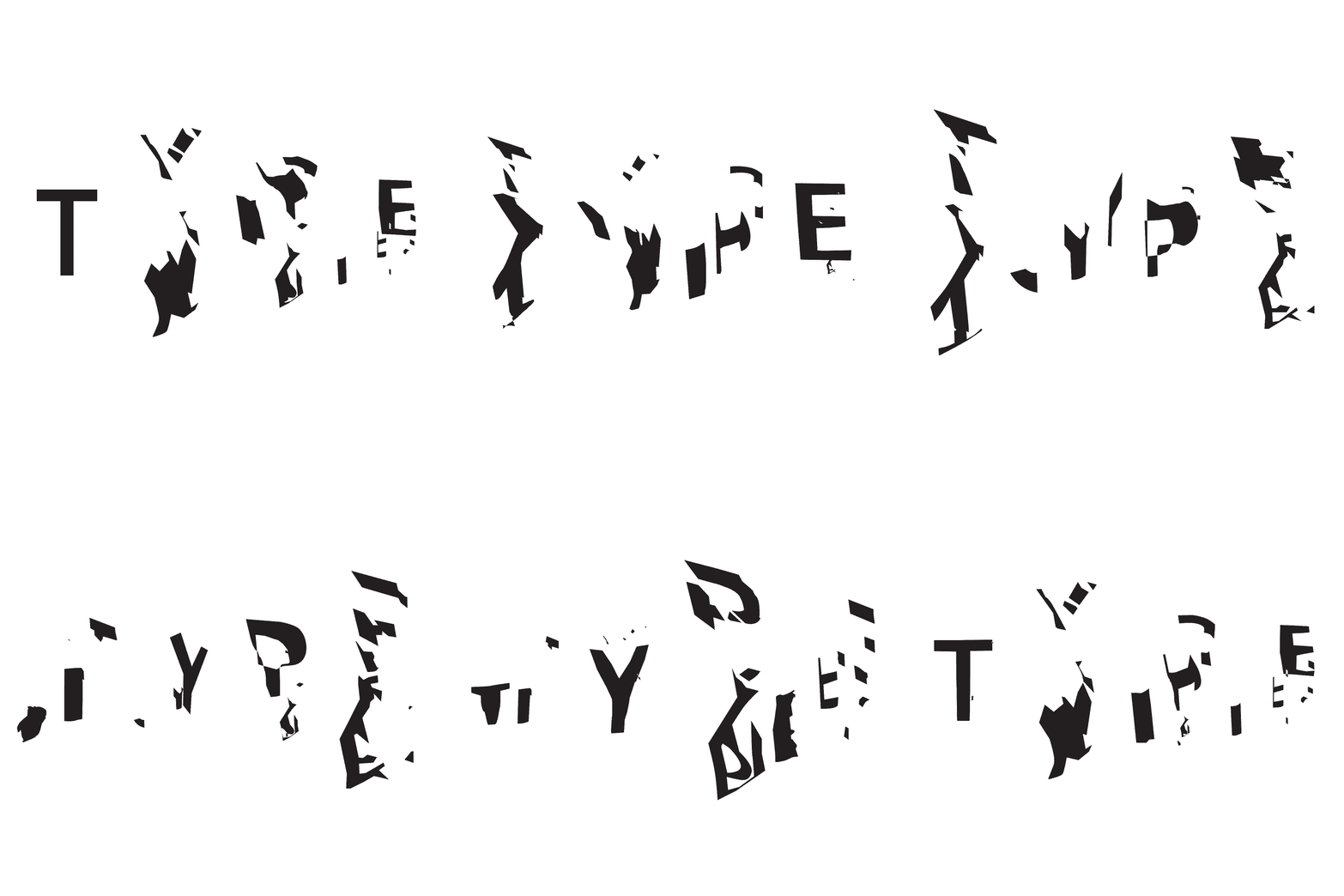
Temporal Type: All the right moves
Experimenting with the boundary between image and type. Exploring the interchange between recognition and perception.
You Spin Me Round

"A" has never been so happy.
Phenotypes
The set of observable characteristics of an individual resulting from the interaction of its genotype with the environment.

Type Over Time
What happens when you explore type and shadow (ala Lazlo Maholy-Nagy) over time? Crazy things happen.